

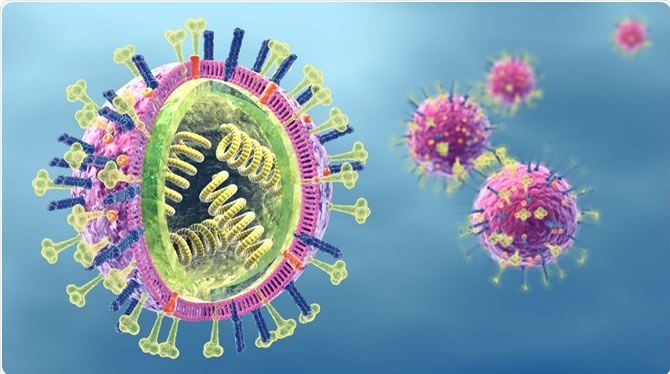
There are around a billion cases of seasonal influenza annually, including 3–5 million cases of severe illness.
It causes 290.000 to 650.000 respiratory deaths annually.
Ninety-nine percent of deaths in children under 5 years of age with influenza-related lower respiratory tract infections are in developing countries.
Symptoms begin 1–4 days after infection and usually last around a week.
Seasonal influenza (the flu) is an acute respiratory infection caused by influenza viruses. It is common in all parts of the world. Most people recover without treatment.
Influenza spreads easily between people when they cough or sneeze. Vaccination is the best way to prevent the disease.
Symptoms of influenza include acute onset of fever, cough, sore throat, body aches and fatigue.
Treatment should aim to relieve symptoms. People with the flu should rest and drink plenty of liquids. Most people will recover on their own within a week. Medical care may be needed in severe cases and for people with risk factors.
There are 4 types of influenza viruses, types A, B, C and D. Influenza A and B viruses circulate and cause seasonal epidemics of disease.
Influenza viruses A:
are further classified into subtypes according to the combinations of the proteins on the surface of the virus. Currently circulating in humans are subtype A(H1N1) and A(H3N2) influenza viruses. The A(H1N1) is also written as A(H1N1)pdm09 as it caused the pandemic in 2009 and replaced the previous A(H1N1) virus which had circulated prior to 2009. Only influenza type A viruses are known to have caused pandemics.
Influenza viruses B:
are not classified into subtypes but can be broken down into lineages. Influenza type B viruses belong to either B/Yamagata or B/Victoria lineage.
Influenza virus C:
is detected less frequently and usually causes mild infections, thus does not present public health importance.
Influenza viruses D:
primarily affect cattle and are not known to infect or cause illness in people.
Symptoms of influenza usually begin around 2 days after being infected by someone who has the virus.
Symptoms include:
The cough can be severe and can last 2 weeks or more.
Most people recover from fever and other symptoms within a week without requiring medical attention. However, influenza can cause severe illness or death, especially in people at high risk.
Influenza can worsen symptoms of other chronic diseases. In severe cases influenza can lead to pneumonia and sepsis. People with other medical issues or who have severe symptoms should seek medical care.
Hospitalization and death due to influenza occur mainly among high-risk groups.
In industrialized countries most deaths associated with influenza occur among people aged 65 years or older.
The effects of seasonal influenza epidemics in developing countries are not fully known, but research estimates that 99% of deaths in children under 5 years of age with influenza related lower respiratory tract infections are in developing countries.
All age groups can be affected but there are groups that are more at risk than others.
People at greater risk of severe disease or complications when infected are pregnant women, children under 5 years of age, older people, individuals with chronic medical conditions (such as chronic cardiac, pulmonary, renal, metabolic, neurodevelopmental, liver or hematologic diseases) and individuals with immunosuppressive conditions/treatments (such as HIV, receiving chemotherapy or steroids, or malignancy).
Health and care workers are at high risk of acquiring influenza virus infection due to increased exposure to the patients, and of further spreading particularly to vulnerable individuals. Vaccination can protect health workers and the people around them.
Epidemics can result in high levels of worker/school absenteeism and productivity losses. Clinics and hospitals can be overwhelmed during peak illness periods.
Seasonal influenza spreads easily, with rapid transmission in crowded areas including schools and nursing homes. When an infected person coughs or sneezes, droplets containing viruses (infectious droplets) are dispersed into the air and can infect persons in close proximity. The virus can also be spread by hands contaminated with influenza viruses. To prevent transmission, people should cover their mouth and nose with a tissue when coughing and wash their hands regularly.
In temperate climates, seasonal epidemics occur mainly during winter, while in tropical regions, influenza may occur throughout the year, causing outbreaks more irregularly.
The time from infection to illness, known as the incubation period, is about 2 days, but ranges from 1–4 days.
Saturday to Wednesday: morning and afternoon
Thursday: Morning