

The cost of IVF for treating infertility in couples varies and depends on various factors. These factors include: the clinic’s up-to-date equipment and facilities, the experience of the medical team, the services provided to the couple, and even the individual’s health insurance. This article examines the cost of IVF and the factors affecting it so that couples can make better choices in infertility treatment.
The cost of IVF has always been a question for couples who are trying to conceive. How much does it cost? These costs in Iran usually range from 15 to 40 million Tomans for each treatment period. It is worth noting that this amount can vary depending on the couple’s condition, medications used, the number of eggs that can be retrieved, and the clinic’s services. Many medical centers offer different prices depending on the equipment and facilities they have.

The cost of IVF varies depending on factors that occur during the treatment period, including: clinic services, experience and expertise of the treatment team, quality of the center’s equipment and devices, and if necessary, additional measures such as the use of additional techniques for egg extraction or gender determination, the use of medications to stimulate ovulation, genetic and medical counseling, and conducting multiple tests have a direct impact on the cost of IVF. Another influential factor is the individual’s health insurance and its type of coverage, which reduces the related costs to some extent.

One of the main factors affecting the cost of IVF is its treatment drugs, the main role of which is to stimulate the ovaries and produce multiple eggs, which accounts for a large part of the costs. These drugs usually vary at different times, and the number and type of drugs change depending on the patient’s needs.

Before treatment, the patient needs to undergo a series of tests and consultations, such as blood tests, ultrasounds, and hormonal status checks, which help the doctor determine the best treatment method for infertility, each of which has different costs and is necessary for treatment.

The cost of IVF is higher in clinics that use advanced equipment and up-to-date technologies, including ultrasound machines, laboratory equipment for egg extraction and artificial insemination. The more up-to-date the devices, the more accurate the procedure, the more time-consuming the treatment, and the success of IVF.

In some cases, patients with specific problems such as low sperm quality or genetic disorders are forced to undergo ICSI (intracytoplasmic sperm injection) or PGD (preimplantation genetic diagnosis), which may even require freezing the embryos or transferring them to a surrogate uterus to complete the treatment period, which in turn increases the cost of IVF.

In some cases, one treatment course may not be enough to achieve results and the patient may need to undergo IVF several times, which usually occurs when ovulation or the quality of eggs and sperm is below normal, and each treatment course includes a separate cost and different consultations.

In some cases, basic insurance may only cover a limited portion of the costs, while supplementary insurance may include more coverage for medications, tests, or ultrasounds. If the patient is not covered by insurance, the cost paid by the patient will be a very large financial burden and the cost paid will vary.
In addition to the variable cost of IVF, the IVF process is also a complex and lengthy process that takes an average of 4 to 6 weeks, starting from the time before egg retrieval and continuing until the person takes a pregnancy test and receives the results.
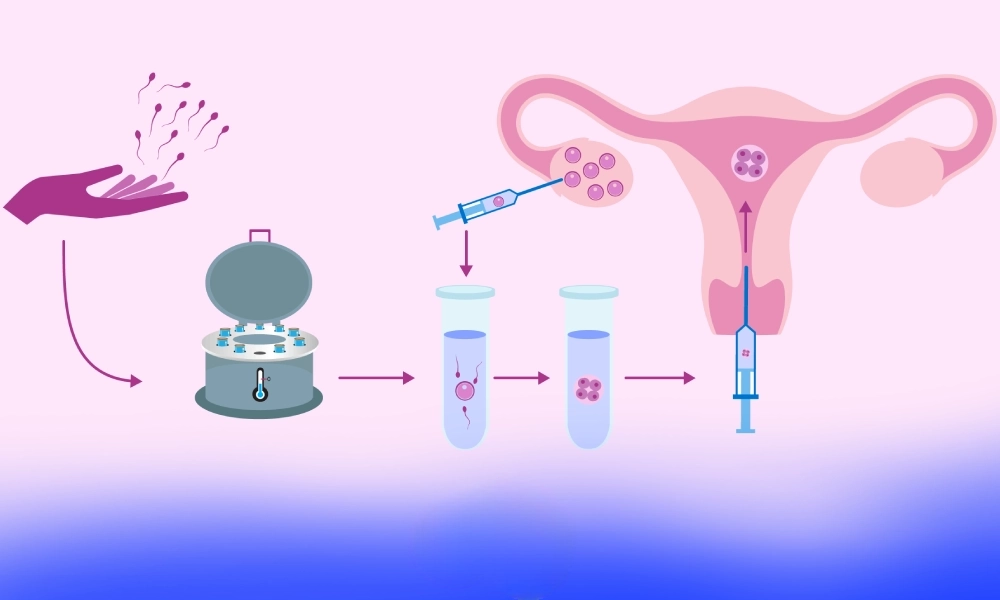
A healthy lifestyle, proper nutrition, no stress, enough sleep, daily physical activity, weight control, quitting smoking and drugs have a significant impact on the effectiveness of IVF. Measures that should be taken before IVF include:
There is no need for absolute rest or sleeping in a specific position, and the person continues their daily activities with caution. It is recommended to avoid sexual intercourse and strenuous activity and have relative rest. After 48 hours, a bath can be taken. If the patient has severe pain, he or she should see a doctor to be examined for ovarian hyperstimulation syndrome, ovarian torsion, and infection. It is also recommended to observe the following:
The person should take a pregnancy test 14-16 days after IVF and do a blood test twice at an interval of 2-3 days. If the result is positive, an ultrasound should be done 10 days later and the medications should be taken for up to 3 months.
If both tests are negative, the person should see a doctor and continue the treatment process.
Saturday to Wednesday: morning and afternoon
Thursday: Morning